
Nowadays, well-being isn’t just a personal luxury—it’s a business necessity. Companies are finally recognizing that mental health, resilience, and emotional intelligence are just as crucial as profit margins. Small, daily actions can shape not only how we work but also how we thrive in life.
But let’s be honest: we live in uncertain times. From economic shifts and climate change to workplace stress and global crises, the list of things beyond our control can feel overwhelming. Constantly worrying about these external stressors drains our energy, leaving us anxious and exhausted.
So how do we regain a sense of balance? Enter Stephen Covey’s Circle of Influence—a game-changing concept that puts focus, power, and control back in your hands.
Take Back Control: The Circle of Influence
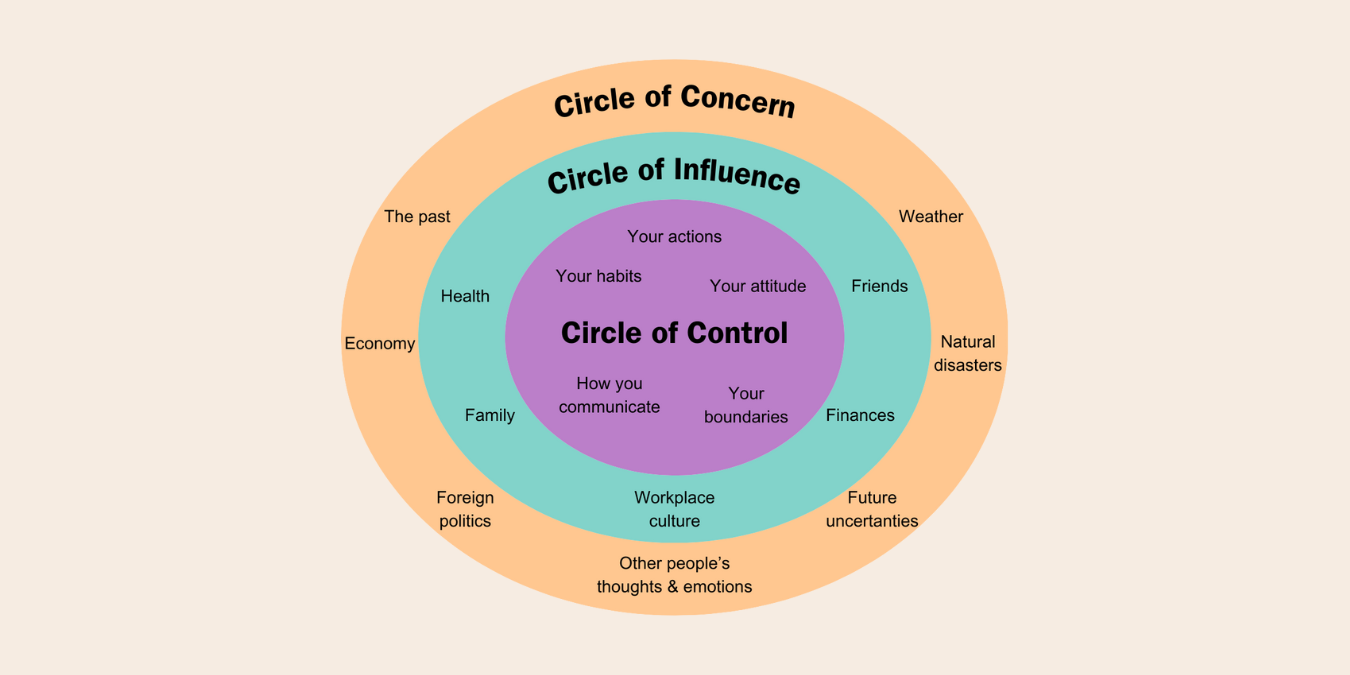
Resilience is the foundation of adaptability and long-term success. Covey’s Circle of Influence, introduced in The 7 Habits of Highly Effective People (1989), teaches us to focus on what we can control instead of wasting energy on what we can’t. By shifting our attention to our own actions, responses, and mindset, we reclaim our sense of agency, reduce stress, and create meaningful impact.
Key Lessons from the Circle of Influence
1. Focus on What You Can Control
Pouring energy into things outside your control—global crises, market fluctuations, or office politics—only leads to frustration and burnout. Instead, shift your attention to your actions, decisions, and responses. When you do this, you’ll feel more grounded and empowered, no matter the external chaos.
2. Expand Your Influence
Every small, proactive step you take—whether it’s improving your skills, building relationships, or fostering a healthier mindset—expands your influence. Over time, you’ll gain greater control over your environment and circumstances, enabling you to tackle even bigger challenges with confidence.
3. Be Proactive, Not Reactive
In a world full of uncertainty, reactive behavior leads to stress and powerlessness. The antidote? Proactivity. Instead of waiting for problems to happen, take charge of your responses, choices, and habits. When you become the architect of your reactions, you maintain control—even in the face of adversity.
4. Improve Personal Habits
Your daily habits shape your influence. By prioritizing self-care, resilience-building, and emotional intelligence, you create a strong foundation for managing stress and seizing opportunities. These habits will serve as your anchor in both challenging and growth-filled moments.
5. Shift Your Mindset
A growth mindset is your secret weapon. When you believe that your skills, abilities, and influence can expand through effort and learning, obstacles become stepping stones instead of roadblocks. This mindset fosters adaptability, innovation, and success—personally and professionally.
Why This Matters in the Workplace
Workplaces are filled with external pressures—tight deadlines, unpredictable changes, and difficult colleagues. Without a clear focus, stress can take over. But when leaders and employees apply the Circle of Influence, they create a culture of empowerment instead of stress. Leaders who focus on what they can change foster engaged, motivated teams, and employees who take charge of their mindset navigate challenges with greater confidence and emotional balance.
The Takeaway: Small Steps, Big Impact
Well-being is not a passing trend—it’s essential for long-term success. By embracing the Circle of Influence, you gain clarity, reduce stress, and empower yourself to make meaningful changes. Small, consistent steps—setting healthy boundaries, focusing on solutions, and taking care of yourself—lead to extraordinary personal and professional growth.
So, take a deep breath. Make one small change today. Your future self will thank you.
References:
Covey, S. (1989). The 7 Habits of Highly Effective People. Free Press.
Deloitte. (2020). The connection between well-being and productivity: Building a resilient workforce. Deloitte Insights.
Goleman, D. (1998). Working with Emotional Intelligence. Bantam Books.
McEwen, B. S., & Sapolsky, R. M. (1995). “Stress and cognitive function.” Current Opinion in Neurobiology, 5(2), 205-216.